

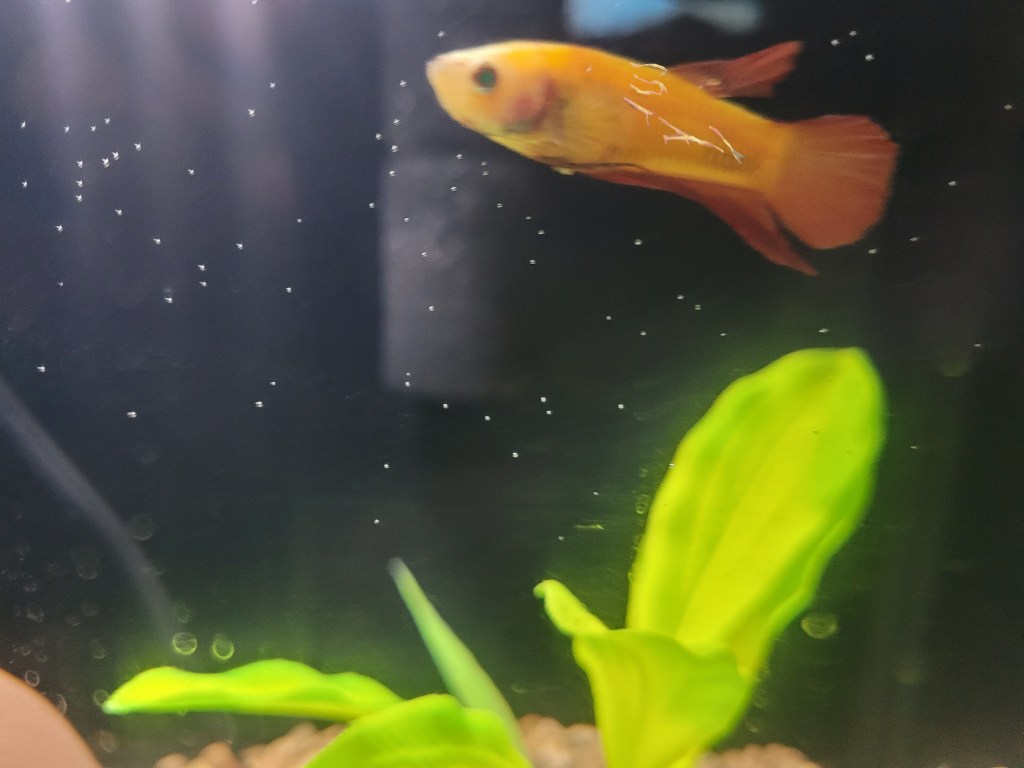
Treating anchor worms (Lernaea) in betta fish requires prompt and thorough action to remove the parasites and prevent further infestations. Here’s some general information on how anchor worms are treated:
- Check Water Parameters:
- Test the water parameters (ammonia, nitrite, nitrate, and pH) in the main tank and/or quarantine tank. Poor water quality can stress the fish and exacerbate fin rot. Perform a partial water change if necessary to improve water conditions.
- Maintain Water Quality:
- Ensure the water in the quarantine tank is clean and free from any harmful substances. Perform regular partial water changes as needed to ensure the parameters are in check.
- Maintain optimal water temperature:
- Bettas are tropical fish and require a water temperature between 78°F to 80°F (25°C to 27°C). When changing water ensure the new water is the same temperature to avoid shock. Use a reliable aquarium heater and thermometer to maintain a stable temperature in the tank.
- Isolate the Infected Fish: If you have multiple fish in the same tank, move the infected betta to a separate quarantine tank. This prevents the spread of the parasites to other fish.
As an Amazon Associate, I earn from qualifying purchases.
- Common Medications used: There are commercial medications available specifically for treating anchor worms in fish. Follow the manufacturer’s instructions carefully regarding dosage and treatment duration. Many of these medications are designed to kill the anchor worms, which should then be expelled from the fish’s body. Common medications are API general cure and Fritz Expel-P.


- Quarantine and Observation: Keep the infected betta in quarantine and observe its condition closely. If you notice any signs of improvement or worsening, adjust the treatment as necessary.
- Observe and Monitor: Watch the fish closely for any signs of improvement or worsening of symptoms. Keep an eye on the fish’s behavior, breathing, and overall appearance.
- Preventive Measures: To prevent future infestations, maintain good aquarium hygiene, and avoid introducing new fish or plants without proper quarantine procedures. Regularly clean and maintain your main tank, and quarantine new fish before introducing them to the main tank to avoid introducing parasites.
- Consult a veterinarian: Consult a veterinarian if possible. They may be able to remove visible worms and perform and prescribe treatments.
If you’re unsure about the treatment or your betta’s condition, it’s advisable to seek guidance from a veterinarian experienced in fish health. Anchor worm infestations can be challenging to treat, and the earlier you address the issue, the better the chances of a successful recovery for your betta.

 Betta Universe
Leave a comment